
Becoming a Leader
Would You Like to Become One?

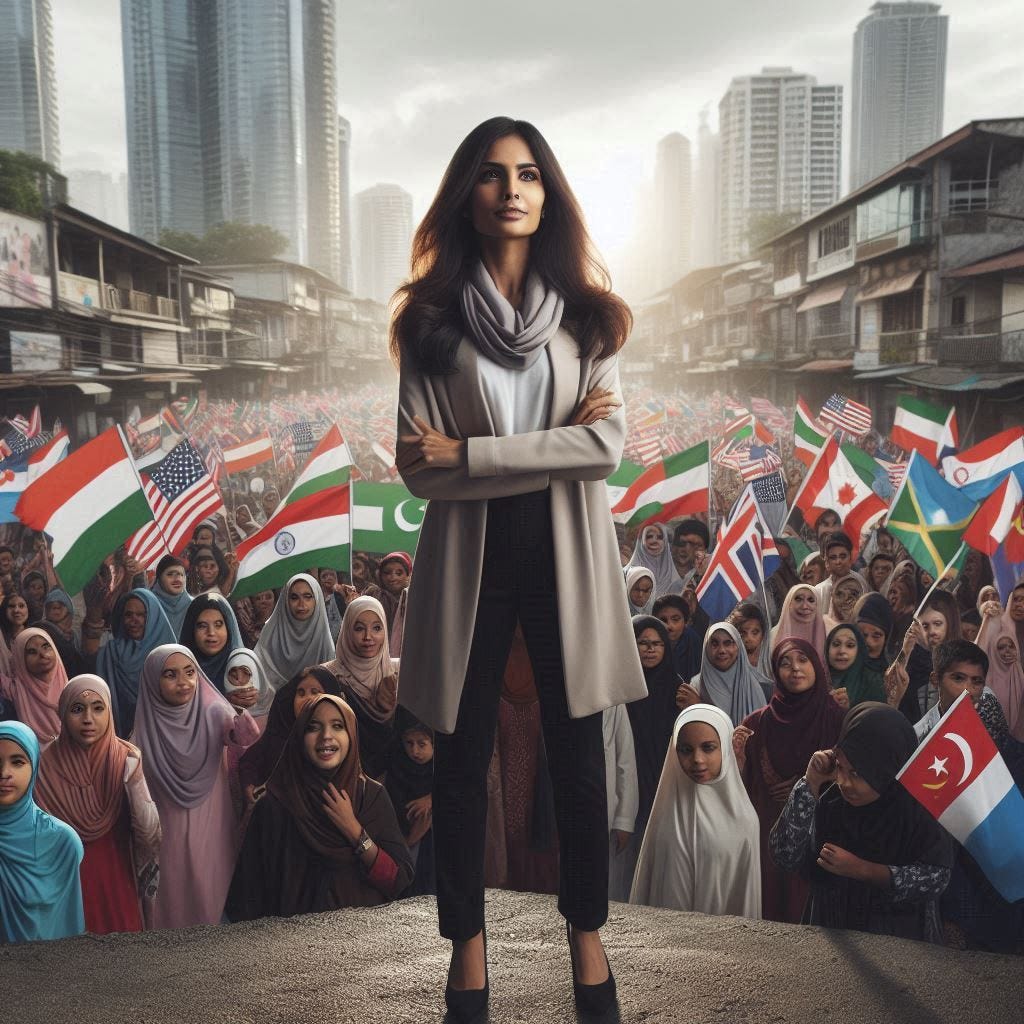
Leadership is one of the most misunderstood—and most urgently needed—qualities of our time.
We often imagine leaders as loud voices in crowded rooms, as political figures or corporate giants. But what if true leadership is something quieter, deeper, and more human? What if it's not about commanding people, but about guiding them? Not about climbing the ladder, but about lifting others?
Whether in families, communities, organisations, or nations, leadership is not a title—it’s a function of character. And if we are to create a fairer, freer, and more conscious world, we must rethink not only who should lead, but how leaders are formed.
This is not a call for everyone to run for office. But it is a question worth asking:
Would you like to become a leader—not just in status, but in service, skill, and soul?
In this post, we’ll explore the inner and outer journey of becoming a leader:
What characteristics define a worthy leader?
What should leaders study, practice, and embody?
How does meditation, yoga, and inner discipline support leadership?
What does a healthy relationship between leader and community look like?
How should we hold leaders accountable—and how can we recognise one?
What Makes a True Leader?
The ideal leader is neither perfect nor all-powerful—but they are deeply anchored in their values and committed to something greater than themselves. They exhibit a blend of personal integrity, clarity of vision, emotional intelligence, and disciplined action.
Some of the core qualities include:
Integrity: A consistency between thought, word, and deed—even when no one is watching.
Humility: A willingness to learn, to be corrected, and to stay grounded regardless of power.
Compassion: A sincere concern for the suffering of others—and a desire to alleviate it.
Courage: The ability to make difficult decisions with clarity and calm, even under pressure.
Clarity: The capacity to see systems, relationships, and consequences clearly.
Presence: A way of being that inspires trust—not through charisma, but through stability.
These qualities are not inherited. They are cultivated—over time, through inner work, life experience, and conscious practice.
What Should Leaders Study and Learn?
A true leader must be both a thinker and a listener—rooted in knowledge but guided by wisdom. The path of learning should be wide and lifelong. Core areas of study may include:
Philosophy and Ethics: To guide decisions beyond personal or political gain.
History: To gain perspective on human behaviour, cycles of power, and civilisational change.
Psychology: To understand human needs, trauma, communication, and motivation.
Ecology and Economics: To make decisions that sustain both people and the planet.
Conflict Resolution: To facilitate healing and understanding across differences.
Spiritual Studies: To develop inner awareness, moral clarity, and service orientation.
Education for leadership should not be technical only—it should nourish the inner self just as much as the intellect.
Does Yoga and Meditation Help?
Yes—and more than most leadership training programmes would admit.
Yoga and meditation are not just tools for stress relief. They are disciplines of self-awareness, helping individuals connect with something stable within themselves. A leader who meditates is more likely to:
Respond rather than react.
Recognise their own ego and blind spots.
Cultivate patience and deep listening.
Stay centred amidst crisis or conflict.
Act from conscience rather than compulsion.
A mind that is scattered, addicted to stimulation, or trapped in fear cannot lead with wisdom. Practices like yoga, breathwork, journaling, and silence train a person to lead from the inside out.
What Kind of Environment Forms Leaders?
Contrary to popular belief, leaders are not only born in elite schools or political dynasties. In fact, many of the world’s wisest guides came from modest origins, shaped not by privilege, but by reflection, struggle, and community.
The best environment for leadership formation includes:
Mentorship: Learning from elders, guides, and teachers who model wisdom.
Shared dialogue: Participating in discussions and study groups that deepen collective insight.
Opportunities to serve: Taking small leadership roles in community, family, or peer settings.
Cultural spaces that reward integrity over ego: Where humility is honoured, and feedback is welcomed.
Access to books, tools, and time: To study, reflect, and grow.
Leadership is grown in the soil of trust, learning, and responsibility—not showmanship or power.
What Should a Leader’s Relationship With the Community Be?
Leadership is a relationship, not a role. And that relationship must be built on trust, transparency, and humility.
A true leader:
Listens before speaking.
Remains accessible and open to criticism.
Treats people as equals, not subordinates.
Works in partnership with the community, not above it.
Invests in developing new leaders, not just building their own brand.
Leadership is not about being followed. It’s about helping others rise, think, and act with greater awareness.
How Should Leaders Be Held Accountable?
No matter how evolved a person may be, power can distort judgment. That’s why true leaders welcome accountability—not as punishment, but as protection.
Ways to ensure accountability might include:
Transparent decision-making processes and accessible public records.
Ethics boards or peer review councils.
Rotating terms and shared leadership models to prevent power hoarding.
Open feedback channels for the communities they serve.
Personal practices of self-auditing and reflection (like journaling, coaching, or group inquiry).
In a healthy society, leadership is neither untouchable nor unchecked—it is trusted precisely because it is questioned and held to a high standard.
How Can We Recognise a Leader?
Look beyond credentials. Look for signs of integrity, emotional presence, and clarity in the small things.
You’ll often find true leaders:
Taking responsibility even when it's inconvenient.
Creating spaces for others to speak and shine.
Remaining calm when others panic.
Learning openly, failing humbly, and returning with stronger insight.
Speaking less, but saying more.
Leadership isn’t always visible until it’s needed. But it leaves traces—in how a person moves through the world, how they treat others, and how they show up when things go wrong.
Final Reflection: Would You Like to Become One?
This is not about ambition. It’s about responsibility.
If you’ve ever looked at the world and thought, "I can help fix this,"—that’s a leadership seed.
If you’ve ever helped someone rise when it would have been easier to step over them—that’s a leader in action.
If you’ve chosen truth over comfort, service over self-interest, or awareness over distraction—you’re already walking the path.
We don’t need more rulers. We need more guardians, more listeners, more truth-tellers, more guides. We need people who are rooted enough to stay grounded, and brave enough to step forward.
So ask yourself, sincerely:
Would you like to become a leader?
Because if you do—start now. Not with a campaign, not with a title, but with your presence, your practice, and your people. The world is watching. And more than ever, it needs you.
🔍 Further Reading & Practices: Tools to Recognise a True Leader
If we are serious about transforming how we choose public officials, we must look beyond exams and CVs. The challenge is not only assessing what a person knows—but who they are, how they act under pressure, and how they relate to others. Below are readings and frameworks to help boards, communities, or examining committees identify principled leaders within democratic or meritocratic systems.
🧠 1. Character-Based Assessment Tools
Why it matters:
Skills can be taught. Character must be cultivated—and recognised. To evaluate a candidate’s integrity, humility, and capacity for service, traditional interviews and essays are not enough.
Practical Tools:
Situational Judgment Tests (SJTs): Present candidates with ethical dilemmas and ask how they would respond. Look not only for correctness, but moral reasoning, empathy, and systemic awareness.
Blind Peer Review: Allow candidates to anonymously review case studies or propose policy critiques. This reduces performance anxiety and tests critical thinking and clarity of purpose.
Community Feedback Loops: Before final selection, gather anonymous community or peer input on a candidate’s previous roles or collaborative efforts. Did they uplift others? Did they listen?
Further Reading:
The Road to Character by David Brooks
Leadership and Self-Deception by The Arbinger Institute
The Seven Habits of Highly Effective People by Stephen Covey
🧘🏽♂️ 2. Inner Disciplines as Public Leadership Training
Why it matters:
A distracted, emotionally reactive, or ego-driven person cannot lead well—no matter how intelligent. Inner disciplines build the emotional resilience and clarity essential for ethical governance.
Practical Tools:
Mindfulness-Based Leadership Training: Incorporate mindfulness or yoga practices into the candidate preparation phase. Daily journaling, silent retreats, or guided self-inquiry can reveal depth of awareness and intention.
Contemplative Portfolio: Ask candidates to submit a reflection piece describing their inner practices (e.g. meditation, community service, artistic expression, prayer) and what they've learned about self-leadership.
Emotional Literacy Evaluations: Use emotional intelligence tests and self-assessment frameworks to gauge capacity for empathy, feedback, and conflict navigation.
Further Reading:
Search Inside Yourself by Chade-Meng Tan (Google’s mindfulness-based leadership training)
The Art of Happiness by the Dalai Lama and Howard C. Cutler
The Bhagavad Gita (especially chapters on dharma and leadership)
🌍 3. Community-Integrated Leadership Models
Why it matters:
A true leader cannot be identified in a vacuum. Their capacity to lead must be tested and witnessed through service to real communities.
Practical Tools:
Leadership Practicums: Instead of political campaigns, candidates complete a civic practicum—e.g. facilitating a community dialogue, managing a local project, or resolving a small-scale conflict.
Service Record Portfolios: Candidates provide evidence of service-oriented work—volunteerism, mentorship, advocacy, or mutual aid—evaluated not by hours but impact.
Reciprocal Interviews: Let candidates interview one another to assess listening, insight, and non-competitive collaboration. The board observes how they navigate group dynamics.
Further Reading:
Emergent Strategy by Adrienne Maree Brown
Pedagogy of the Oppressed by Paulo Freire
Leaders Eat Last by Simon Sinek
🧭 4. Decision-Making Under Pressure
Why it matters:
Leadership often means acting in crisis. How someone makes decisions under pressure is more revealing than what they say on stage.
Practical Tools:
Simulated Crises: Create mock governance scenarios involving moral ambiguity, competing interests, and real-time pressure. Evaluate not only outcomes, but process.
Restorative Circles: Engage candidates in group dialogue around a difficult case (e.g. public protest, environmental disaster) and observe how they mediate, take ownership, or guide group consensus.
Values Clarification Exercises: Ask candidates to rank values (e.g. justice, security, equity, freedom) and explain how they would navigate value conflicts in policymaking.
Further Reading:
Thinking in Systems by Donella Meadows
Dare to Lead by Brené Brown
On Tyranny by Timothy Snyder
🔦 5. Building Accountability into Leadership Selection
Why it matters:
The best leadership system is one where accountability is built-in, not an afterthought.
Practical Tools:
Term Limits & Rotation: Design the role to prevent long-term power consolidation and ensure knowledge is passed on.
Ethical Oaths and Public Review Periods: Candidates agree to principles of service, transparency, and nonviolence—renewed publicly at regular intervals.
Right of Recall: Citizens or boards can initiate a formal process to review or remove a public leader before the end of term, based on transparent criteria.
Further Reading:
Designing Regenerative Cultures by Daniel Christian Wahl
Rules for Radicals by Saul Alinsky
Blueprint for Revolution by Srdja Popovic
🧩 In Summary: Who Should Lead?
In a society rethinking democracy, the best leaders may not be the most confident or outspoken—but the most trustworthy, wise, and self-aware.
The systems we build to select them should reflect that. The tools above are not definitive, but they point towards a different ethos—where leadership is less about personality, and more about presence; less about control, and more about connection.
Would you like to be part of a society that chooses its leaders this way?
Then we must start now—by changing how we prepare, assess, and support those who step forward.
🏫 Incorporating Leadership Training into Schools
If we want to see a new generation of ethical, competent, and conscious leaders, we cannot begin at adulthood. Leadership training must start early—embedded in our schools, not as an optional add-on, but as a core pillar of civic education.
Just as we teach maths or languages from a young age, we can and should teach the skills of self-leadership, cooperation, and moral responsibility—because leadership is not just for those in power. It’s for every citizen who wants to participate meaningfully in public life.
Here’s how this could work in practice:
🧠 1. Leadership as a Core Curriculum Strand
Rather than a single “civics” class once a year, leadership development would be woven through multiple subjects, encouraging students to connect knowledge to ethics and real-world impact.
Key Components:
Emotional intelligence modules: Teaching self-regulation, empathy, and active listening.
Ethics and decision-making classes: Exploring dilemmas in politics, history, and daily life.
Group projects with rotating leadership roles: Giving students real responsibility to guide, organise, and mediate.
Public speaking & critical discussion forums: Building confidence, clarity, and respect in communication.
📚 2. Meditation, Reflection & Inner Awareness in Schools
To prepare students not just to “perform” but to lead with self-awareness, daily or weekly practices could be introduced:
Mindfulness exercises at the start of the school day to centre attention.
Journaling sessions where students reflect on challenges, emotions, and relationships.
Quiet inquiry periods, inviting students to explore questions like:
“What do I stand for?”
“How do I want to contribute to the world?”
“What does a good leader look like to me?”
These practices cultivate self-knowledge, the foundation of all responsible leadership.
🌍 3. Community-Based Leadership Projects
By secondary school, students could be invited into real-life service roles—not simulations, but meaningful community action:
Designing and leading local improvement projects (e.g. school gardens, recycling initiatives, food distribution).
Participating in youth-led councils where they deliberate on issues affecting the school or wider community.
Mentoring younger students or tutoring peers as a form of leadership-through-care.
In this model, leadership is learned by doing—through contribution, not competition.
📊 4. Holistic Assessment for Leadership Qualities
To recognise and reward true leadership (rather than just academic performance), schools would assess:
Ethical reasoning and empathy, not just debate skills.
Contribution to group learning, not individual achievement alone.
Willingness to take responsibility in difficult situations.
Self-improvement over time, not perfection.
Students could build a Leadership Portfolio over several years, including reflections, projects, peer feedback, and growth milestones. This portfolio would serve as a foundation for public contest applications in adulthood.
👥 5. Teacher Training and Role Modelling
You cannot teach leadership if teachers are not also trained to embody and model it. Educators should receive ongoing development in:
Restorative communication and nonviolent conflict resolution.
Facilitation of group dialogue instead of one-way teaching.
Self-awareness practices (e.g. reflective journaling, mindfulness).
In this environment, students learn leadership not just from books—but by witnessing it daily in the attitudes and actions of the adults around them.
🔁 6. A Feedback Culture from Day One
Schools should normalise feedback as a collaborative, caring process, not a punitive one. From a young age, students could be taught to:
Offer respectful, constructive feedback to peers and teachers.
Reflect on their own mistakes and growth areas.
Participate in student-teacher co-evaluation sessions.
This builds a foundation for mutual accountability—a vital feature of democratic leadership.
🧩 The Bigger Picture: From Classroom to Civic Life
By integrating these principles early on, schools become microcosms of the society we wish to create: transparent, ethical, emotionally intelligent, and cooperative.
Students raised in such systems are more likely to:
Step into public service not as an ambition, but as a calling.
Engage thoughtfully with complex global issues.
Trust and invest in democratic processes that are inclusive and fair.
Recognise true leadership qualities—in themselves and others.
This model also ensures that when it comes time for Public Contest-style exams or civic appointments, candidates are not just intellectually prepared—but morally, socially, and spiritually aligned with the task of leading.
📣 Final Word: Start Where You Are
Education is the seedbed of leadership. Whether you're a parent, teacher, student, or policymaker, you can help shift the focus from obedience to awareness, from performance to purpose.
The earlier we start teaching leadership as a sacred responsibility rather than a power grab, the better chance we have at building a world led by wisdom—not ego.
So the question remains:
What kind of leaders do we want to raise—and are we ready to create the environments they need to grow?